
Castle of Illusion Starring Mickey Mouse Gameplay
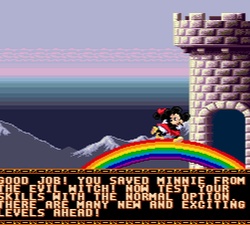
Castle of Illusion takes you by the hand—gentle, yet with a firm grip. Within minutes you feel how Mickey Mouse: Castle of Illusion trusts the player: it doesn’t shove you forward, doesn’t squeeze you with a timer, lets you look around and settle into the groove. You tune in to Mickey’s footsteps, the crunch of leaves in the enchanted woods, the way the scenery seems to tug on its own ropes and fold into platforms. A jump isn’t just a jump—it’s a spring‑loaded lifeline: bounce, land on an enemy, and Mickey ricochets higher like on a trampoline, buying you half a second of hang time to reach a line of coins or a hidden doorway. In Mickey in the Castle of Illusion, every move plays like a little dance—less about flash, more about timing.
Movement and Rhythm
The real magic is how the game teaches you to read the set. Nothing extra: a measured run, a short lead‑up before a gap, a jump, a soft “plop” on a baddie—and you’re already catching the next ledge. When needed, you scoop up a small prop, that toy ball or an apple, and toss it in an arc. This cadence isn’t about sprinting; it’s about calm confidence. Castle of Illusion keeps whispering: don’t rush, take a closer look. A leaf might be a platform, a shadow a step, a background trinket a doorway to a bonus nook. Soon you’re tracing a fine thread of tempo: two steps, jump, rebound, pause, throw—and on you go through a hall that looks like theater but plays by game rules.
Levels as Theater Stages
The Enchanted Forest checks your spacing: rolling logs, hanging vines, platforms that seem to vanish if you linger. Toyland is a carnival of springs and candy bridges, with off‑screen clown giggles and floors that bow like music‑box lids. In the stormy stretch the wind grabs you, and you have to nail the timing—when a gust presses you down, take the short, reliable hop. In the library scene every book is a trampoline, a wall, or a stair; letters flutter like butterflies from an inkwell, and the platforming note turns into a light, look‑closer puzzle. Near the finale, at the Castle of Illusion’s very walls, corridors start to trick the eye: doors send you astray, mirrors toy with perspective, and you learn to watch not only your footing but the wings and backstage.
Enemy Encounters
Fights aren’t brawls; they’re two‑count duels. Enemies are simple, not foolish: they hop, patrol set paths, take potshots from afar. Your lifeline is the stomp‑jump: land from above, spring higher, and you’ve got a window to dodge the next hit. Throwing a picked‑up item is plan B when footing is slick or the platform is narrow. It’s that Sega‑era classic: lean inputs, crisp response, the sense that you’re sketching arcs in the air. Mickey Mouse: Castle of Illusion keeps things disciplined without smothering you—letting you find your own tempo, whether cautious scouting or bold strings of hops with no pause.
Secrets and Illusions
Secrets here aren’t about wild exploits; they reward a sharp eye. Spot a slightly different shade of leaves—check it, that could be a passage. A shadow on the wall suddenly outlines a door—step in and you’re in a cozy bonus room. Over here an extra life with Mickey ears, over there a handful of jewels that chime like glass marbles. These finds don’t break balance—they brighten the run, like flipping a pop‑up album and discovering one more hidden picture.
Bosses and Rainbow Trophies
Every boss is a small vignette with a clean pattern. The forest tree stomps and lobs cones in arcs—count the beat, wait for the lull, hop and land that springy poke from above. In Toyland a jack‑in‑the‑box bounces—its waves roll across the trampoline, and the answer is simple and elegant: one precise rebound on the right beat. Then come creatures from thunderclouds and from library shelves, and each time the game asks for something new—pinpoint position here, patience there. Win, and you’re paid in precious gems—the gathered rainbow trophies weave into a guiding bridge that opens the way to the castle’s heart, where the witch hides your goal. It’s a rare feeling: you literally watch your progress build the road ahead.
Difficulty, Done Right
Mickey in the Castle of Illusion isn’t about punishment; it’s about learning on the fly. Slip up—and you’ll know where you hesitated or rushed. The game lets you take a couple of hits, adjust the route, and most importantly, it plays fair. No sudden pits in the dark; if something looks like a trap, it is; if a platform looks shaky, it’ll wobble. That breeds healthy stubbornness—you want to replay a stretch cleaner, pocket one more gem, and polish a hall until the finale gives you that tidy, satisfying door‑clap.
A Sense of Celebration
This is that rare Mickey platformer where every scene feels like a postcard from childhood. Castle of Illusion Starring Mickey Mouse goes by a few names—just Castle of Illusion, Mickey Mouse: Castle of Illusion—but whatever you call it, the core stays the same: soft, responsive controls, fair hazards, memorable bosses, secrets within reach. It doesn’t run on finger‑twisting combos, but on feeling. You remember the rhythm of the stages like a tune, and catch yourself thinking a perfect jump is almost a chord. And when the curtains finally close, you remember why we love this dapper Castle of Illusion—because it throws a party out of a simple step, a simple jump, and the most universal adventure there is.