
History
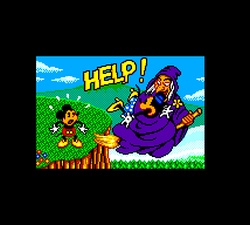
“Castle of Illusion Starring Mickey Mouse” is that cartridge that whisked us into a waking childhood dream. For some it was simply “Castle of Illusion,” others called it “Mickey Mouse: Castle of Illusion,” and a few went with the cozy “Mickey in the Castle of Illusion.” On the Sega Mega Drive/Genesis it was a model, home‑warm platformer with Disney heart: you sprint along cookie‑crumb shores, boing off baddies with a springy butt‑bounce, scoop up apples and lob them at clowns, and somewhere ahead—beyond thick enchantments—Minnie is waiting. The witch Mizrabel locks her in a tower, and every stage plays like its own cartoon: a toybox forest, whispering books, clockwork innards, sugar‑crystal caves. Along the way you collect rainbow gems—piece by piece they form the bridge to the finale. The soundtrack burrows into your memory, and Mickey’s animation is plush and alive—the kind you’d power the console back on for “one more run”; a rare old‑school side‑scroller that feels like an actual fairy tale, not just a gauntlet of hazards.
Launched in the early ’90s, Sega’s platformer became an instant must‑have cart: it served up adventure without hurry and taught play by rhythm—dialed‑in jump timing, neat rebounds, nosing out secrets, and boss bouts staged like little set pieces. Castle of Illusion zips you back to an era when game design spoke in a child’s voice yet respected the player, and when buttery pixel art and background magic made stages feel snug and homely. For where the project sits in the genre’s history and the 16‑bit wave, have a look at Wikipedia—just picture Mickey’s first step into that grand hall, and your heart will start humming those familiar tunes.
Gameplay

In Castle of Illusion you snap into a springy groove from the first steps: walk, build momentum, jump — then that soft little bounce off an enemy’s head. Mickey practically dances: you nudge the arc midair, delay the landing, squeeze out an extra hop to snag a shelf of gems. Castle of Illusion is a Mickey Mouse platformer where every second plays like a bite-size cartoon: a secret door whispers behind a curtain, library pages rustle. The rhythm swings between cozy and tense: one moment you’re calmly scooping up jewels and apples to toss, the next the floor ripples beneath you — and timing is everything. Mickey in the Castle of Illusion doesn’t push too hard, but it demands precision: jump on the beat, eyes forward — and suddenly you’re in a hideout with an extra life.
In Mickey and the Castle of Illusion, the adventure is a ride of contrasts: Toyland with wind-up bosses gives way to a forest where every log tests your nerves. You learn fast: lock into the jump — bounce — apple cadence, read the patterns, and boss fights click together like a puzzle. Secrets are fair: a wall quivers, a platform dares you to risk it — and there’s the hidden passage. Castle of Illusion: Mickey Mouse is old-school joy with Disney magic, tucked-away rooms, and generous checkpoints; more in the gameplay breakdown.